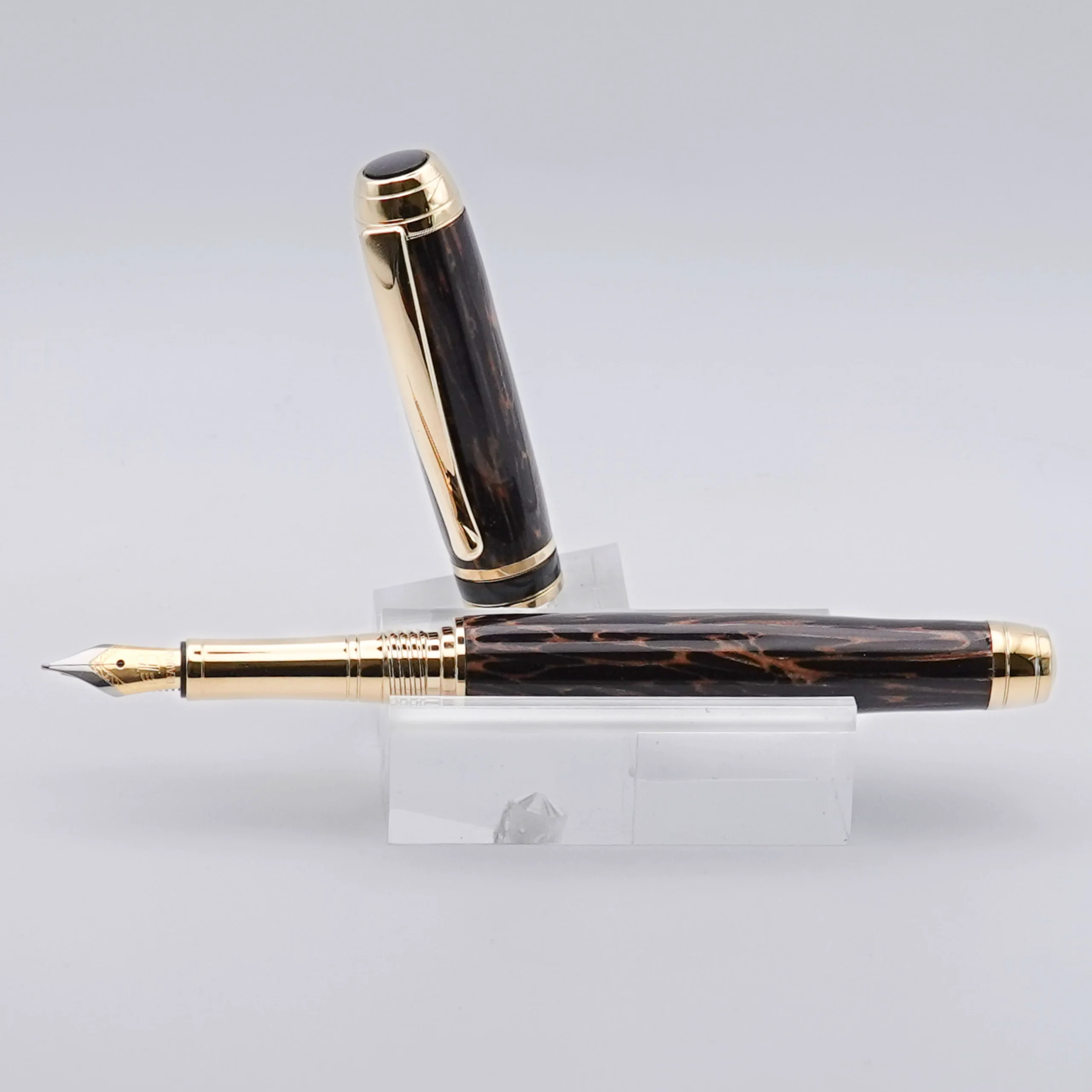
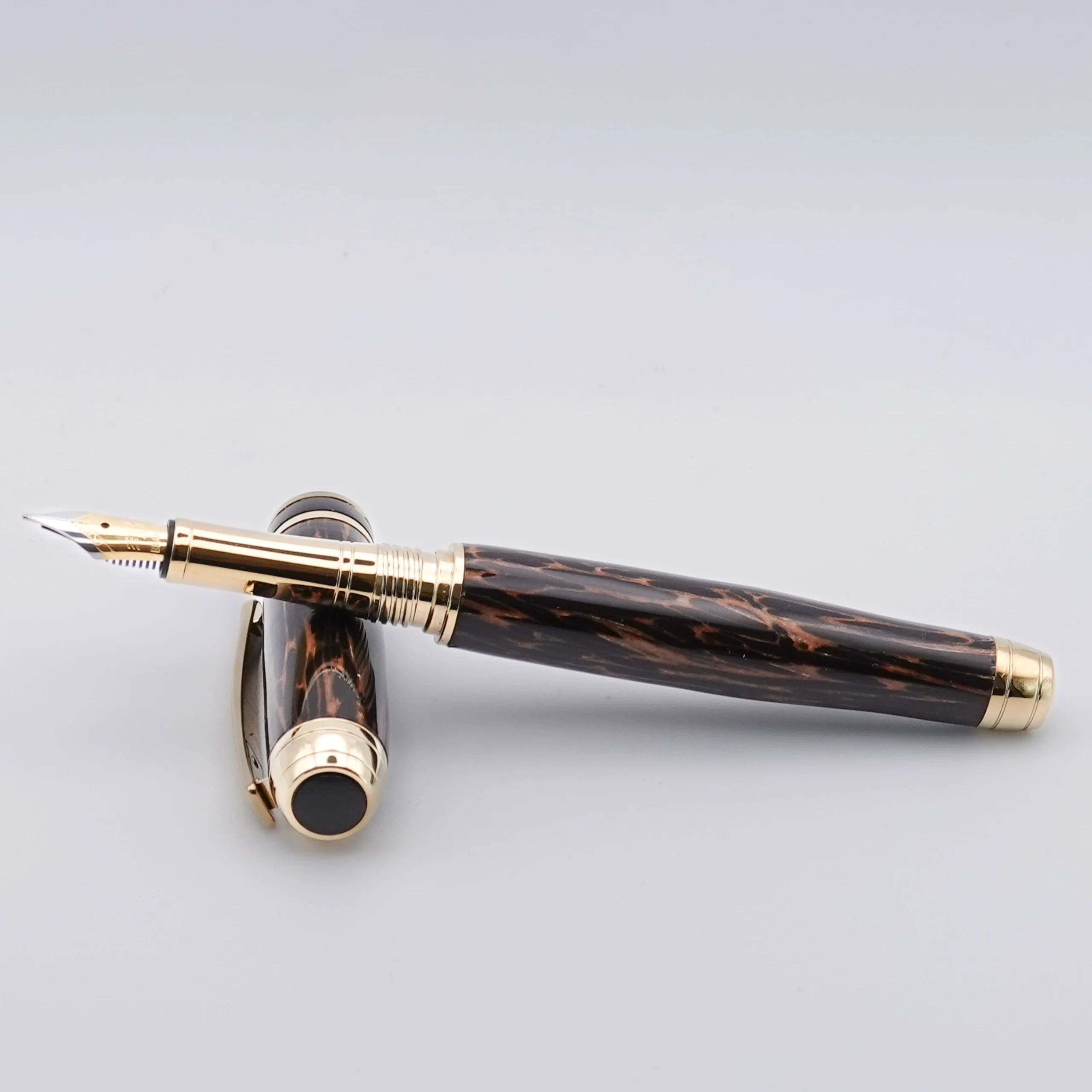
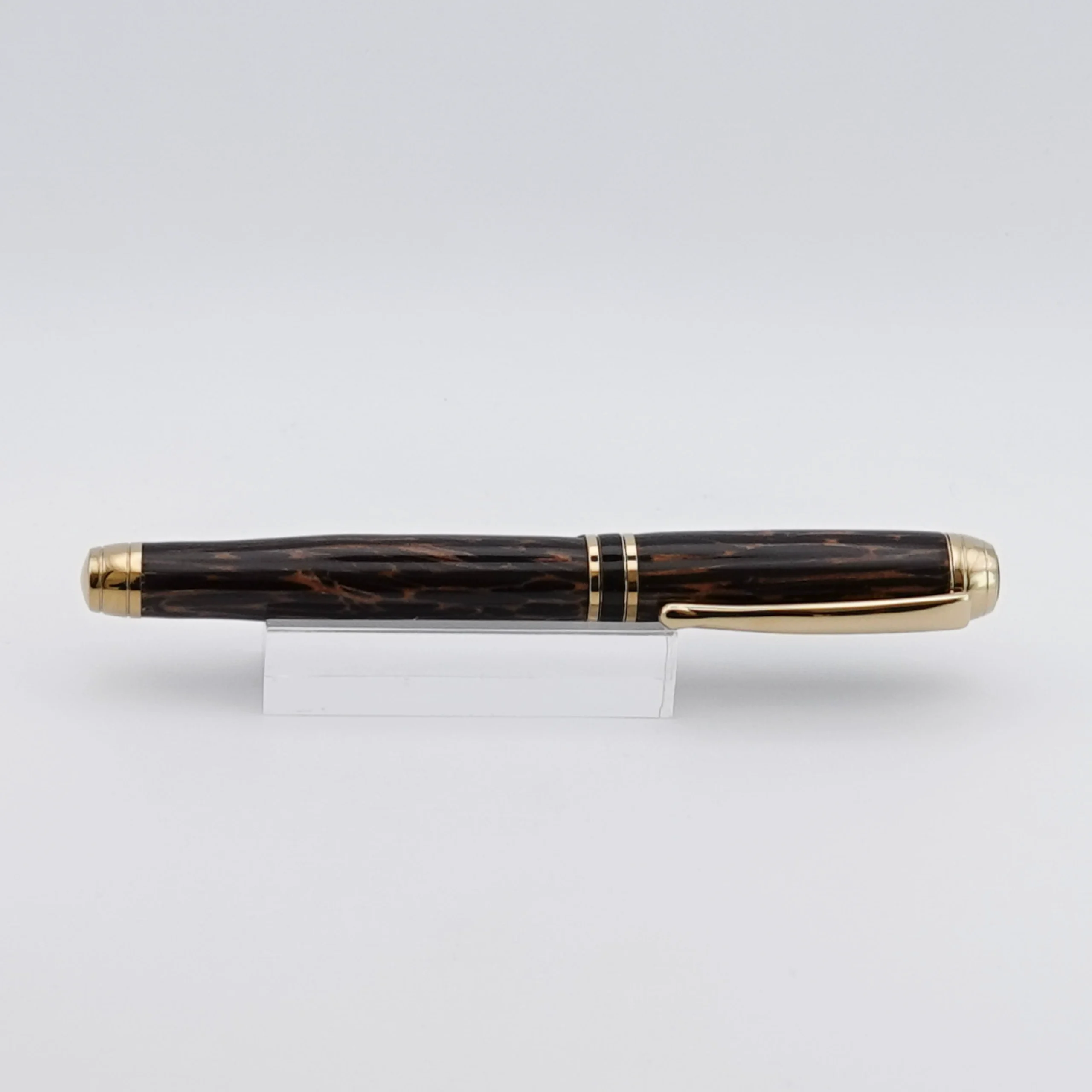
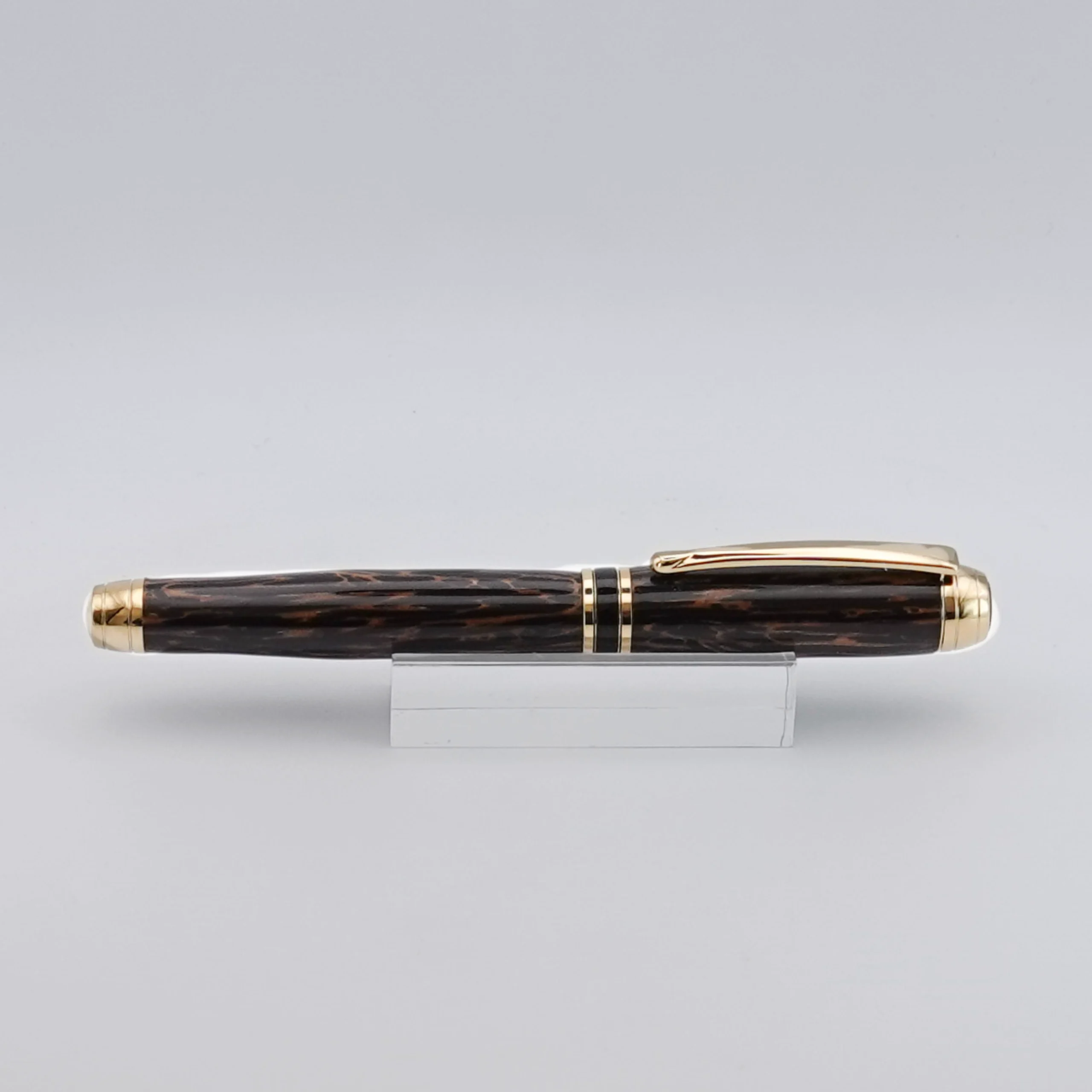
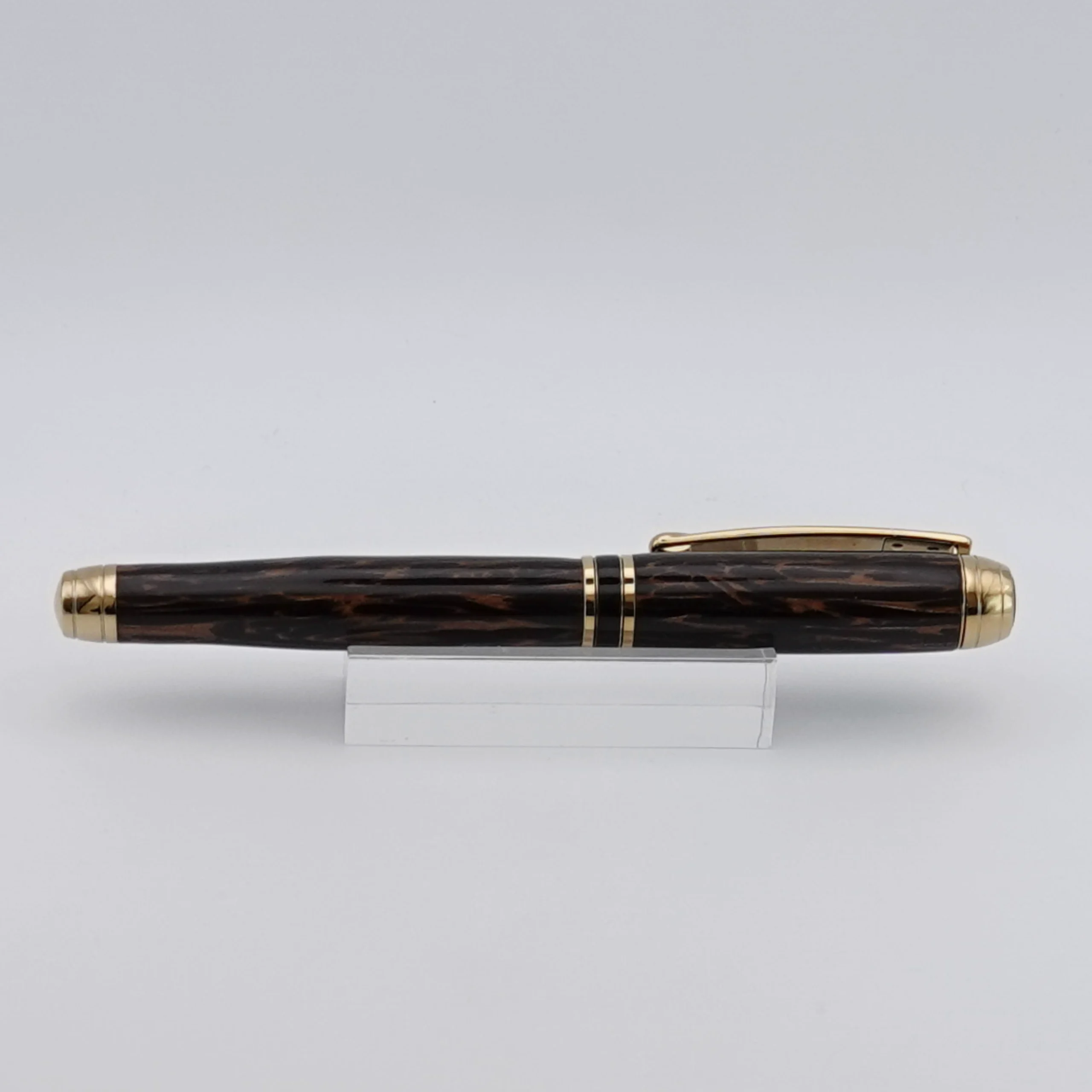
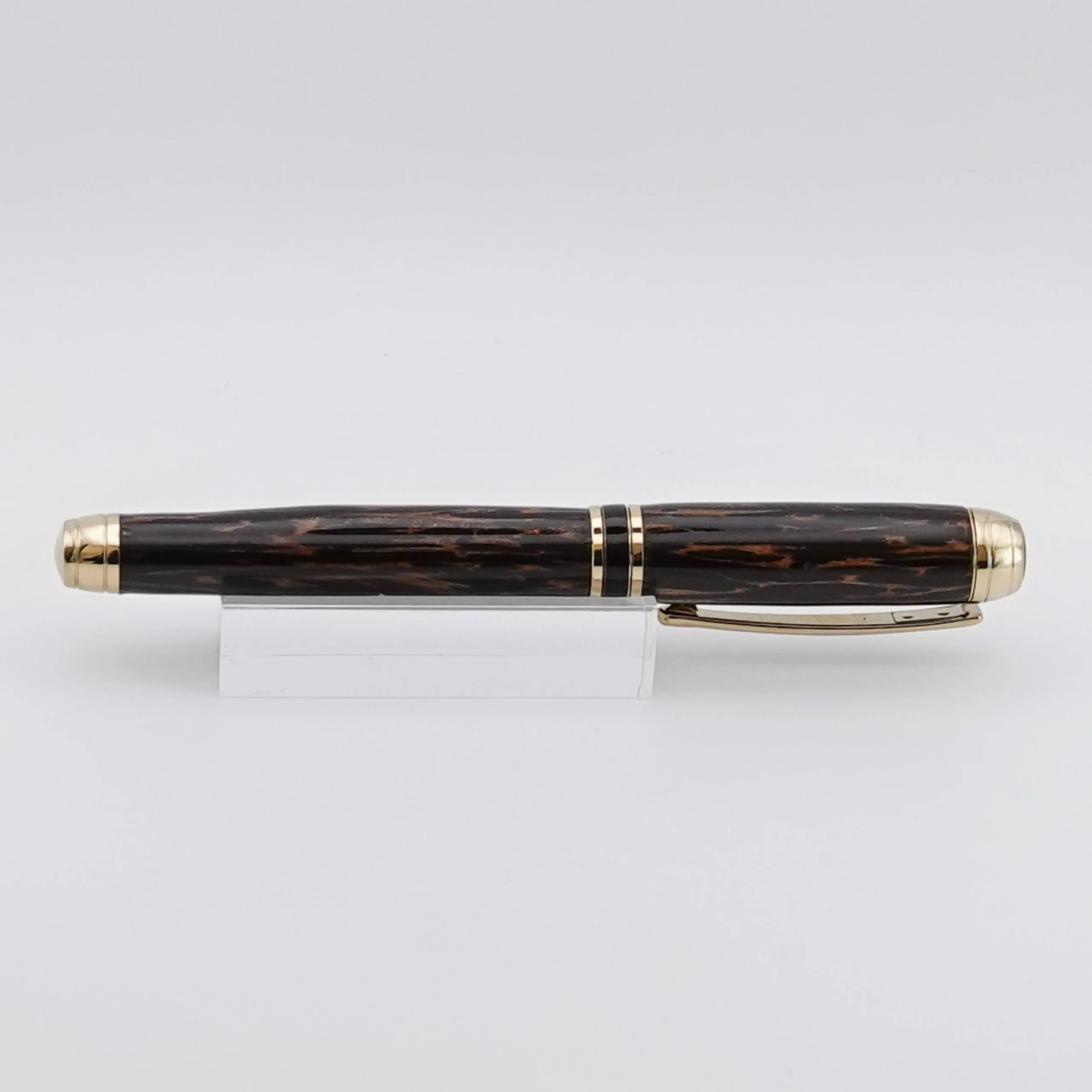
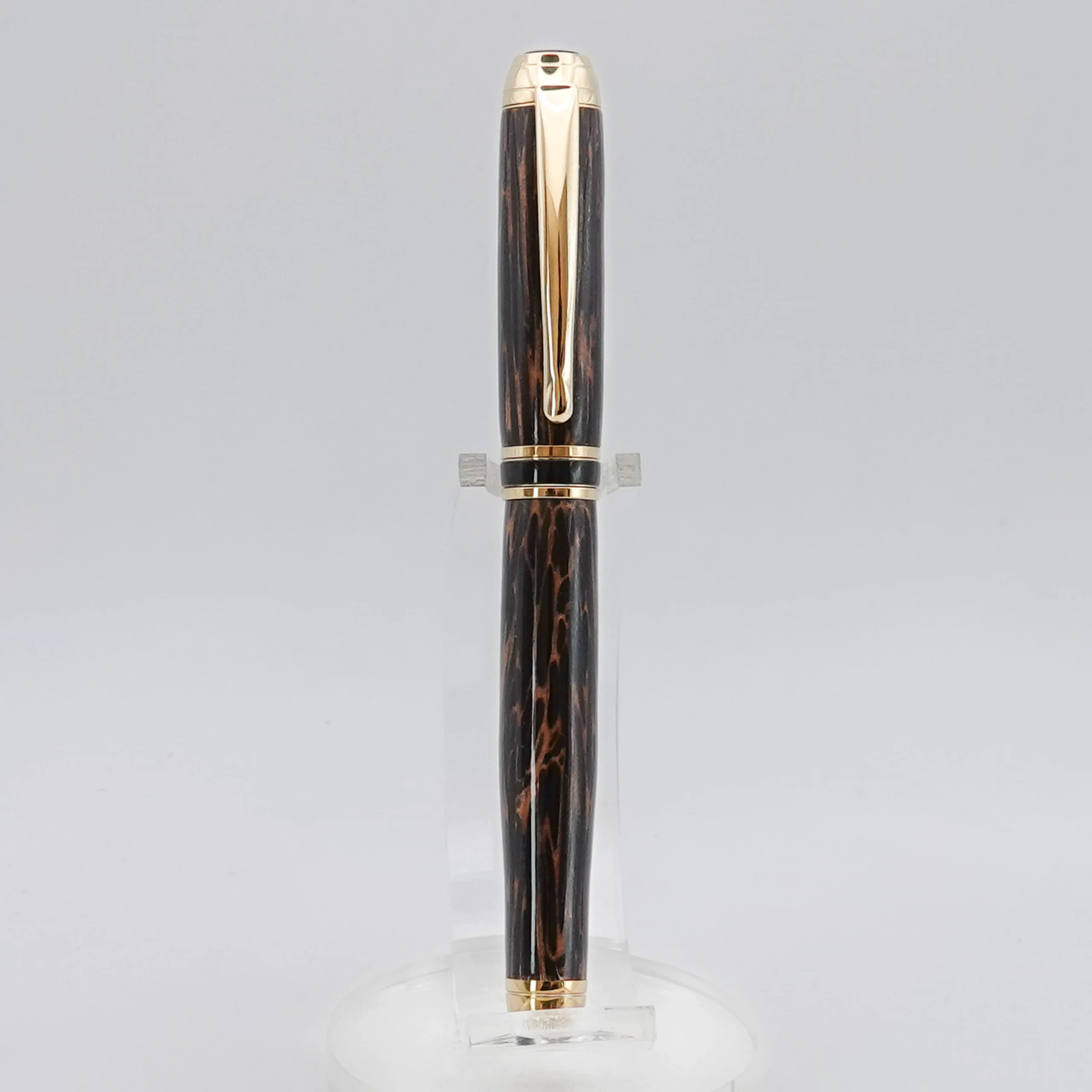
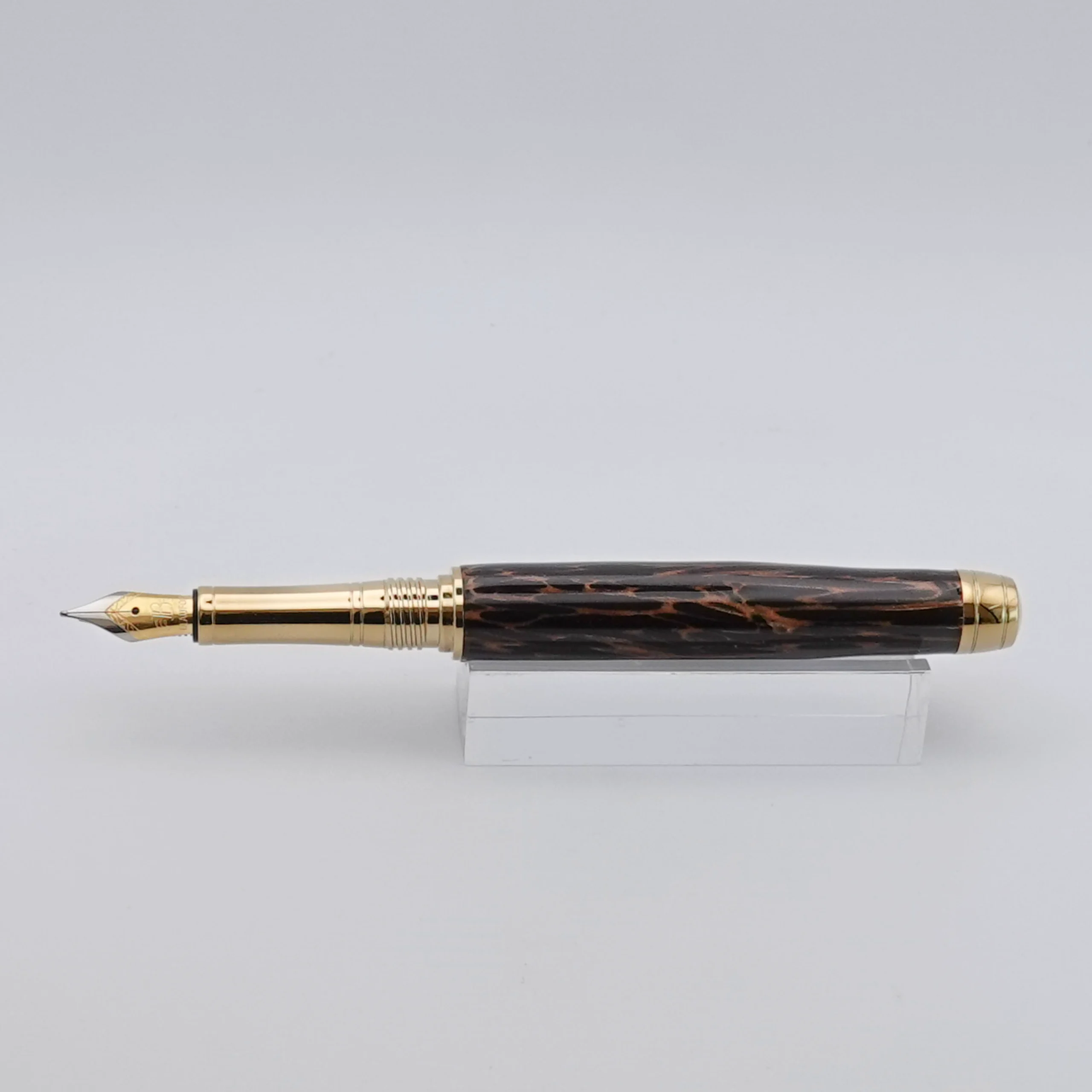
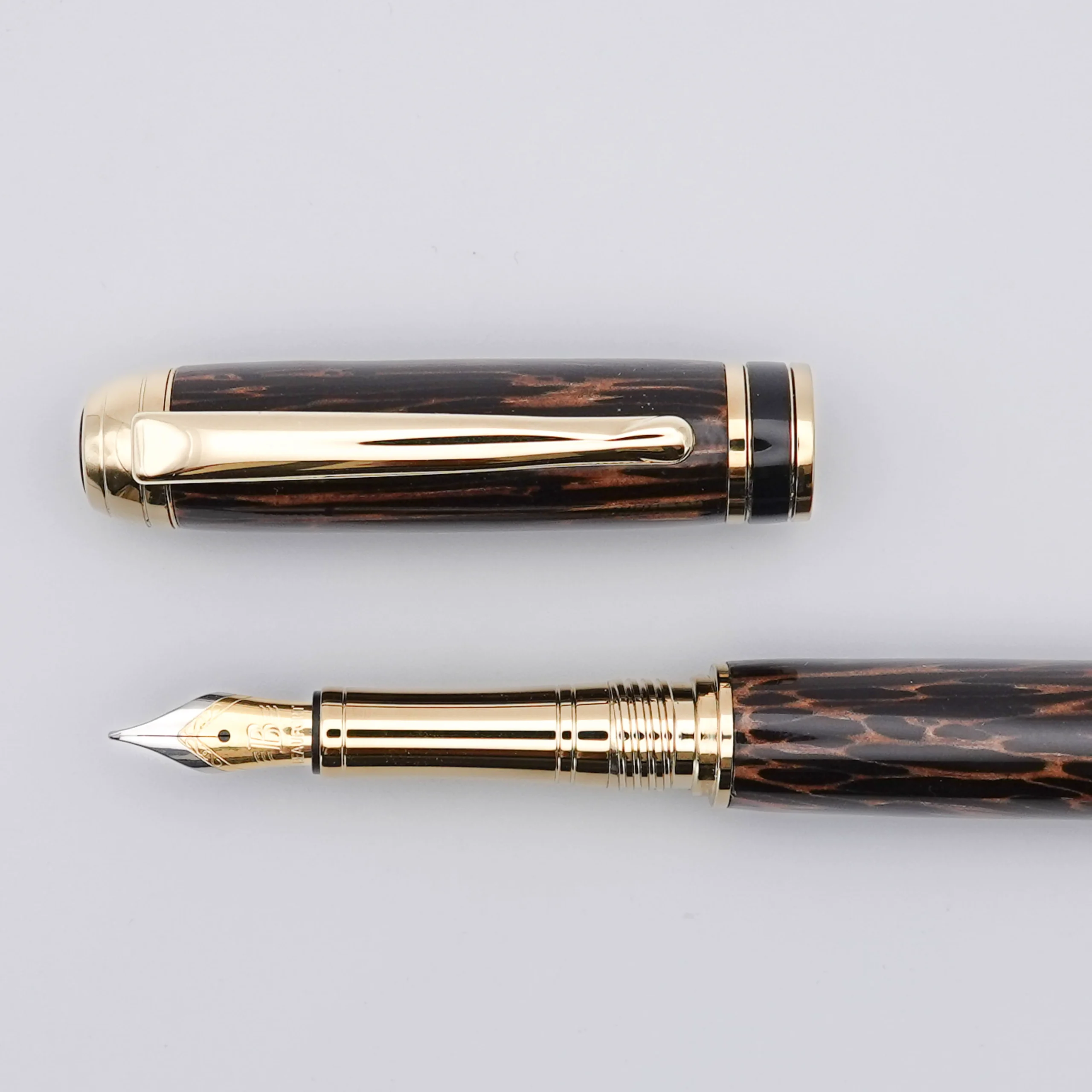
Black Palmira, also known as Black Palm and Palmyra Palm.
It is native to South and Southeast Asia. These palms grow to 50–100 feet tall with a trunk diameter of 1–2 feet, thriving in coastal regions, dry plains, and near water sources. The tree is culturally significant, often harvested for its fruit, sap (used for palm sugar, in addition to its timber.
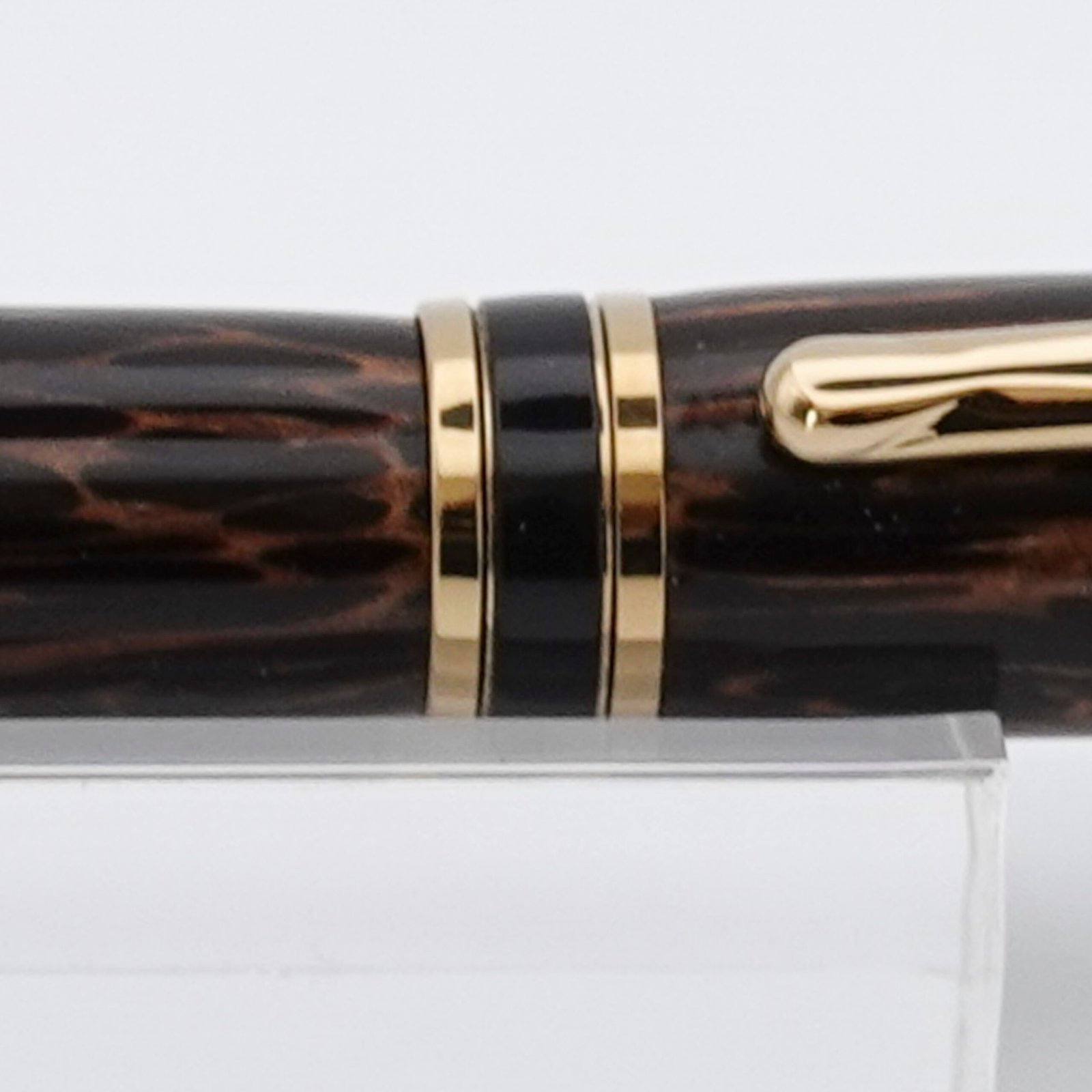
The heartwood of Black Palmira is distinctively dark, ranging from deep brown to jet-black, often with lighter streaks of brown, tan, or grey running through it, creating a striking contrast. This wood does not have true grain like hardwoods; instead, it features a fibrous, vascular structure with bundles of dense fibres embedded in a softer matrix, giving it a speckled, almost dotted appearance in cross-section. The texture is coarse, with a low natural lustre, and the surface can feel rough due to its fibrous nature which making it extremely hard to work with.
Black Palmira is often used for small, high-strength applications like knife handles, walking sticks, turned objects (e.g., bowls or pens). It’s less common for furniture due to the difficulty of working with it.